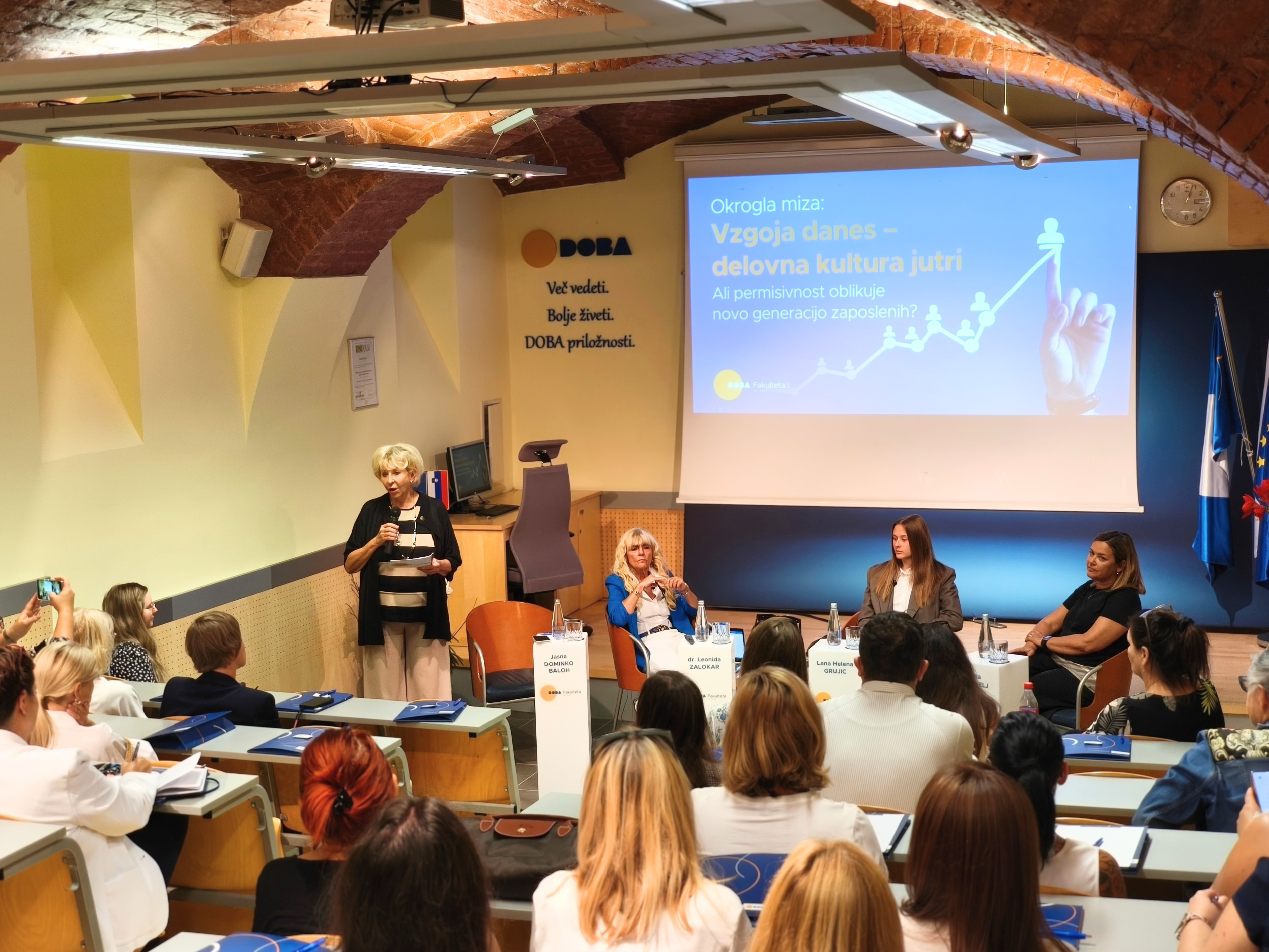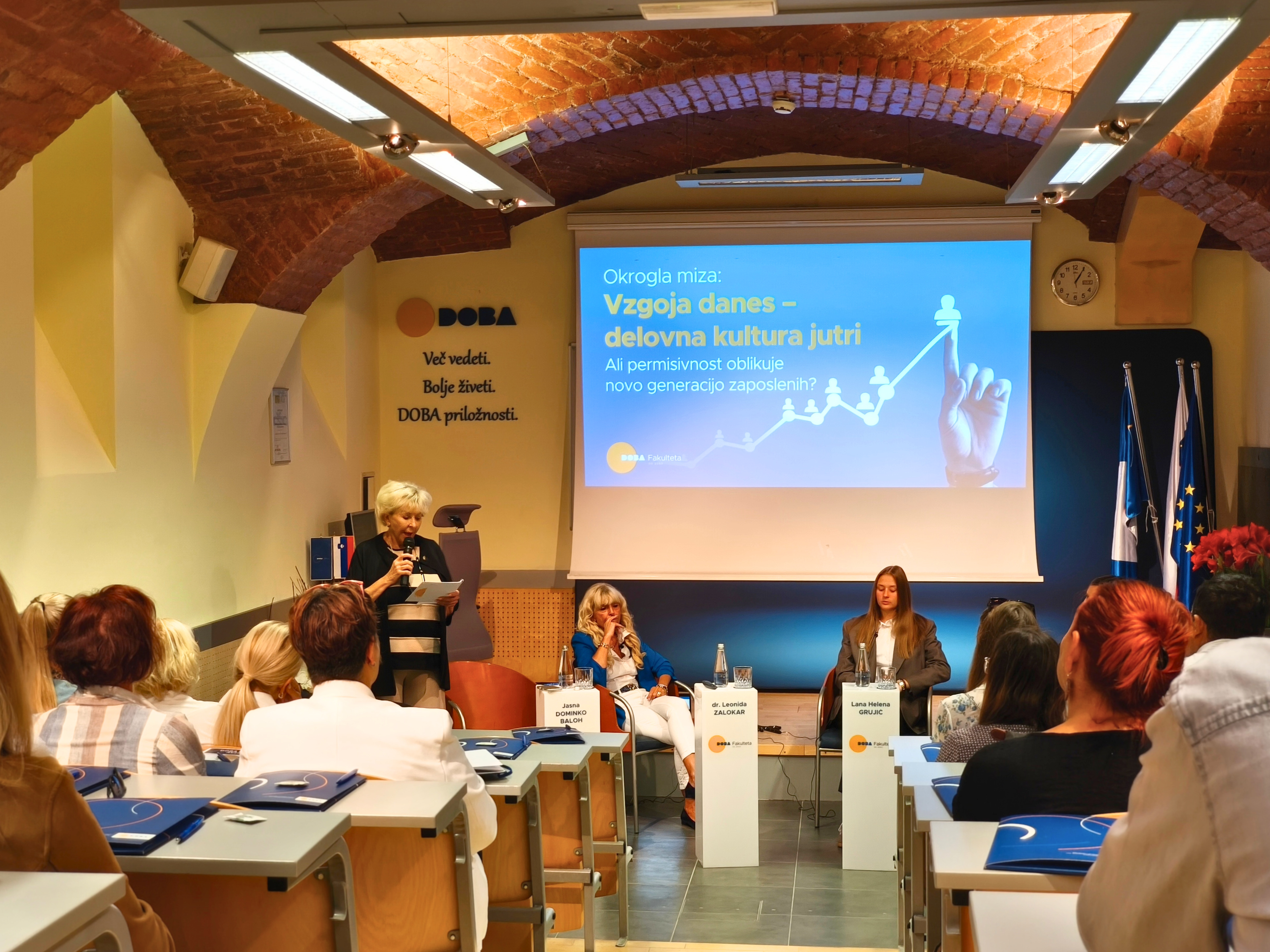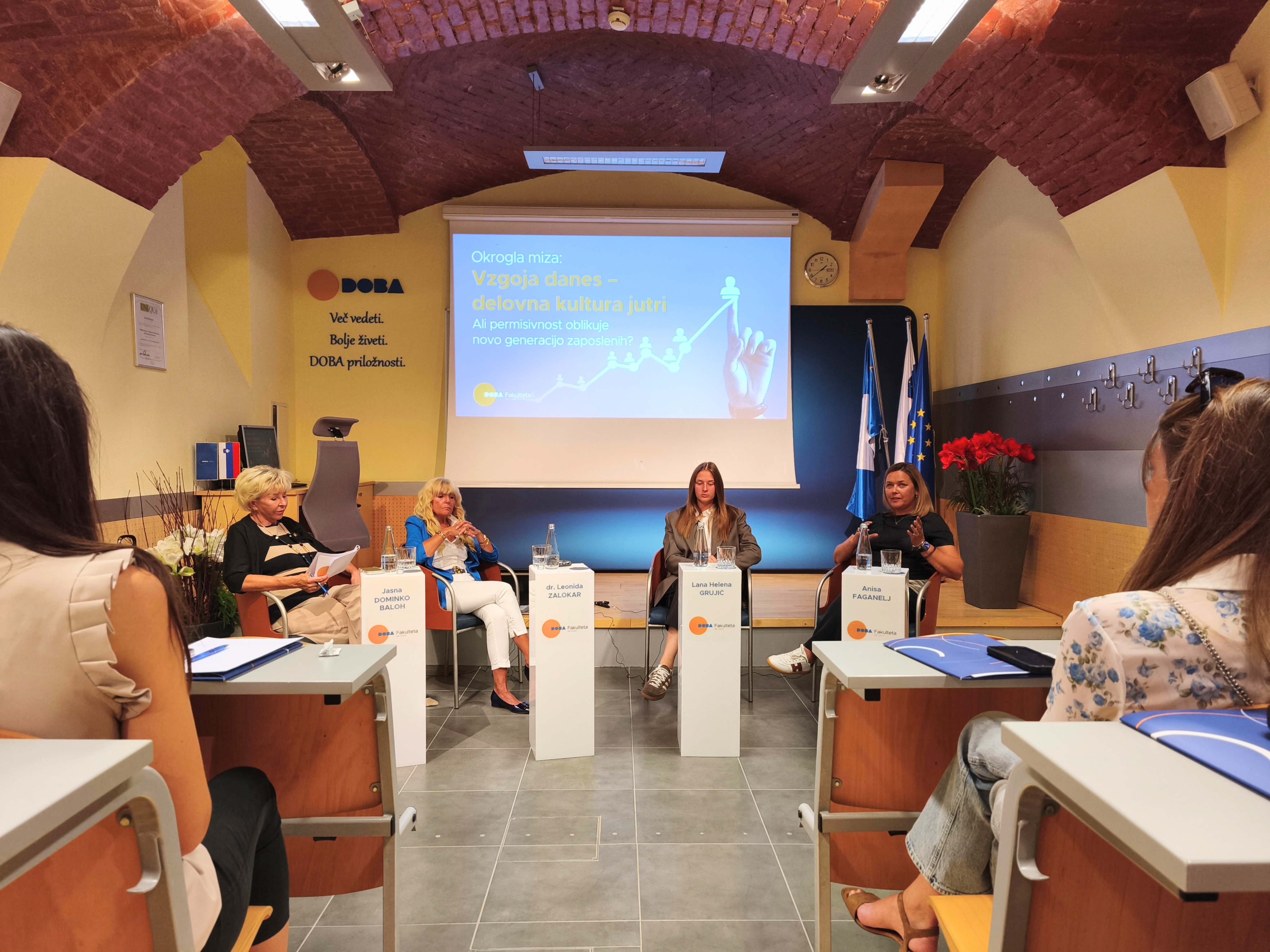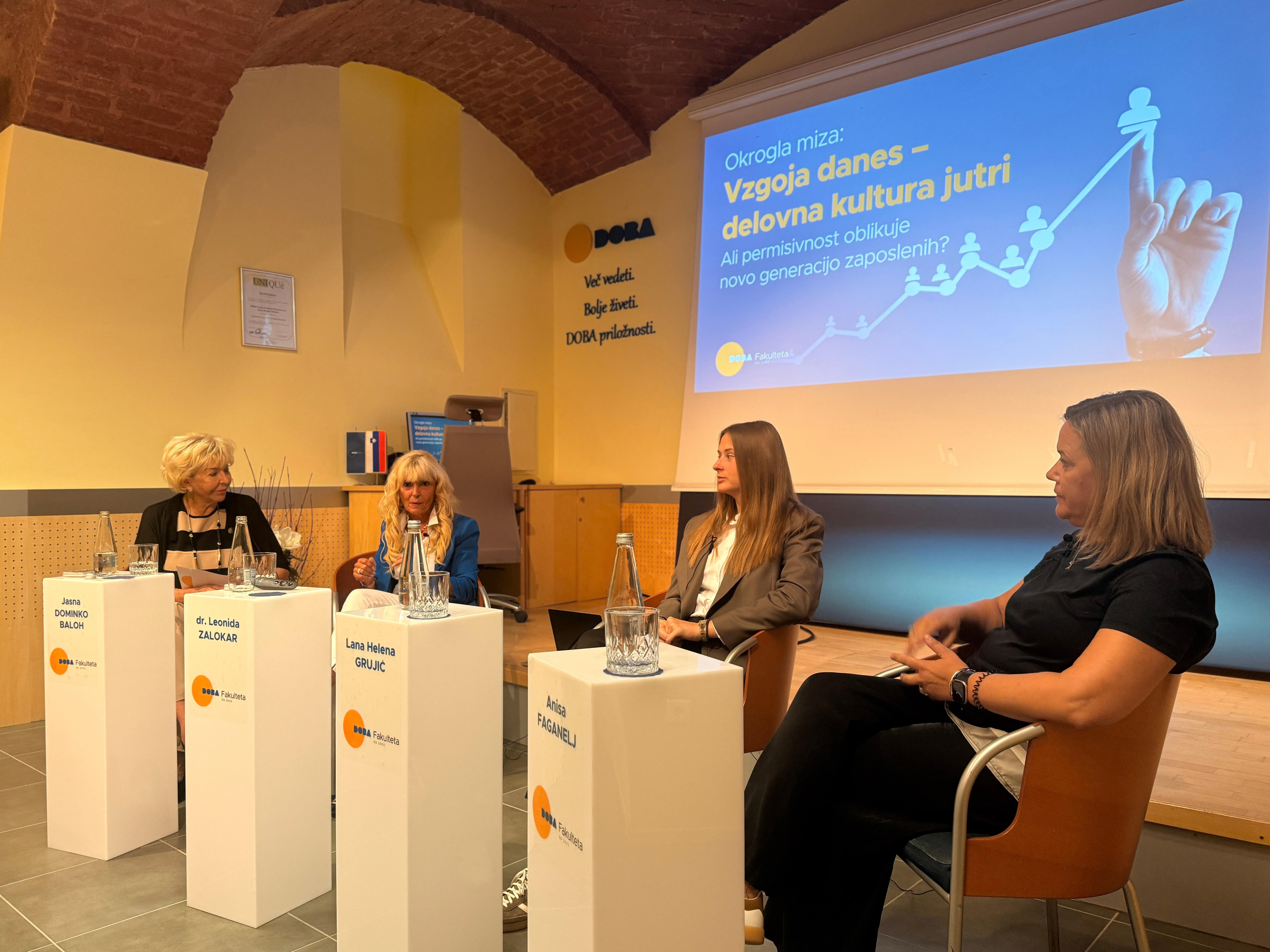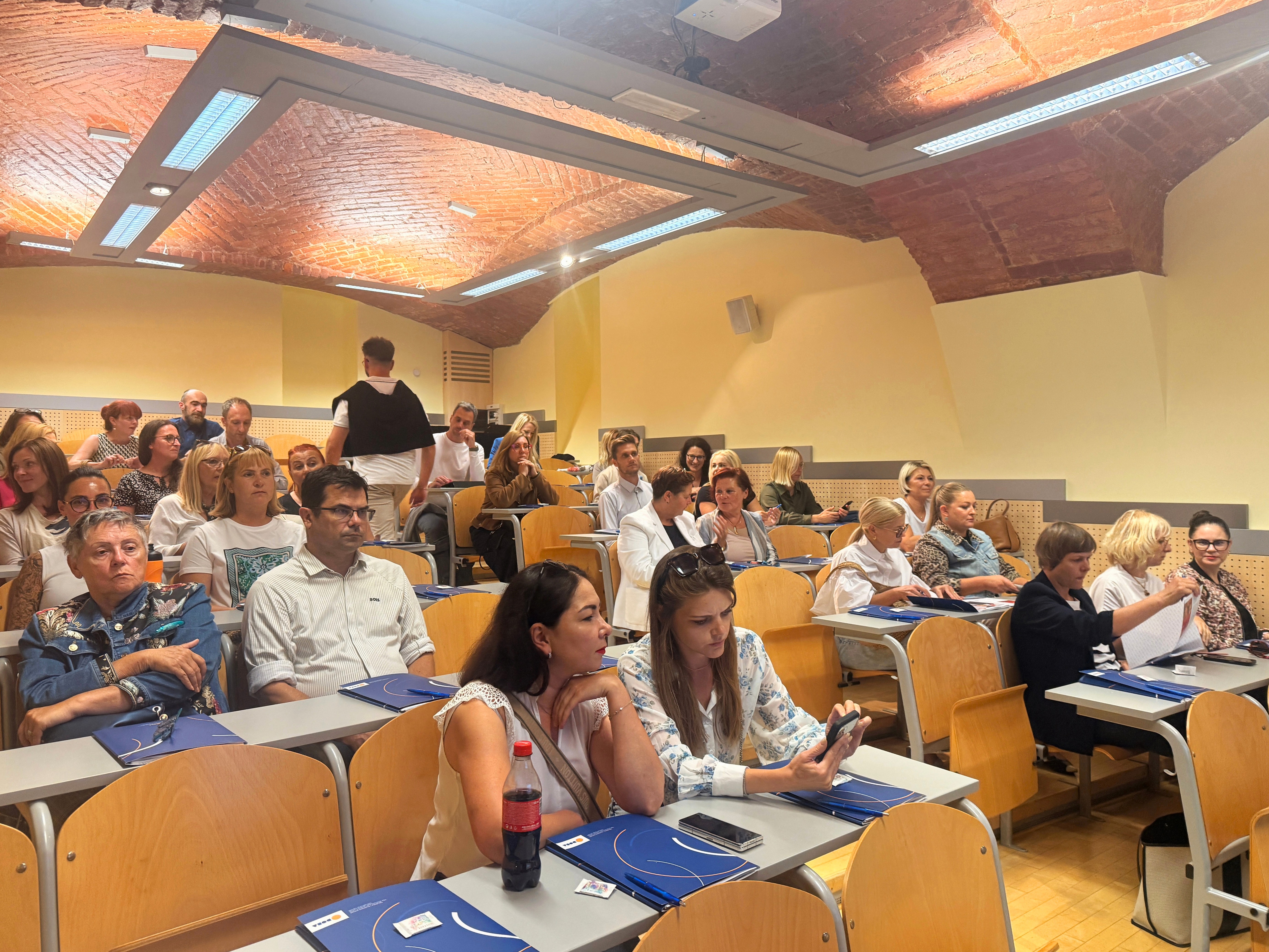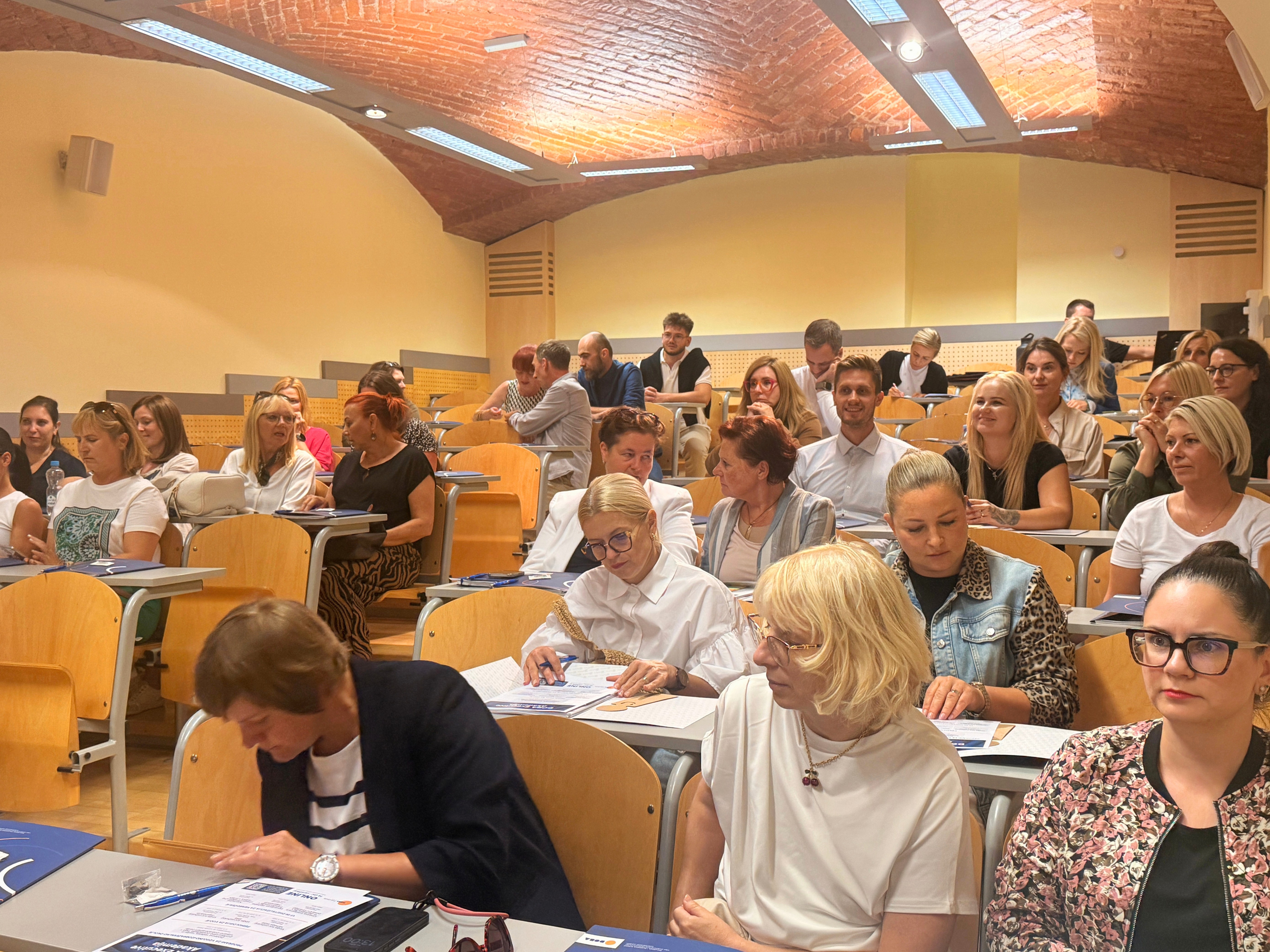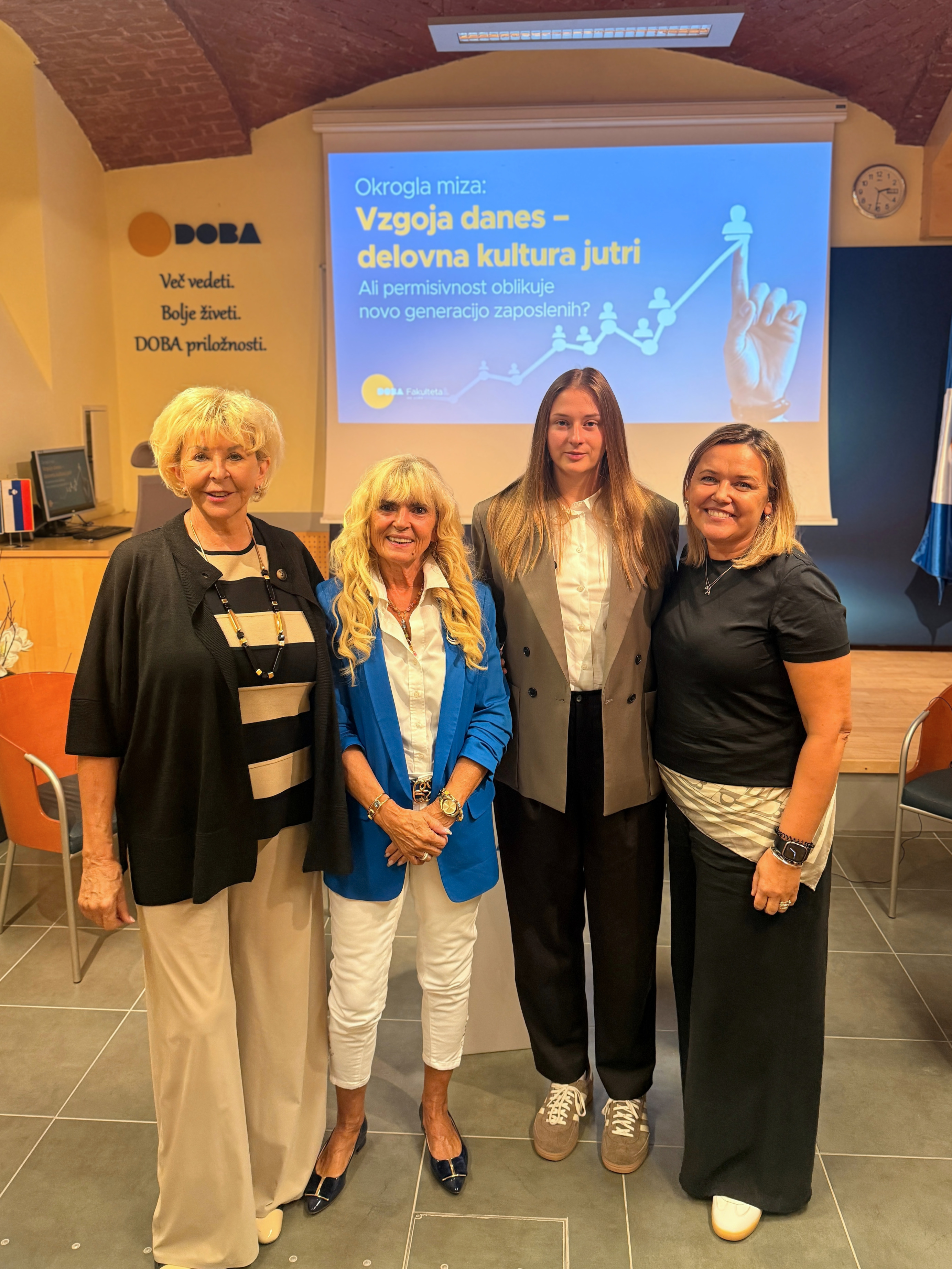
On Tuesday, 15 September 2026, DOBA University of Applied Sciences hosted a round table entitled Parenting today – work culture tomorrow, bringing together perspectives from psychology, research, young people and business. The speakers discussed how parenting, education and social circumstances influence young people as they enter the labour market, and what role employers play in this process.
The discussion showed that Generation Z cannot be described using simple labels such as “spoilt”, “overly sensitive” or “less ambitious”. Young people want greater autonomy, flexibility, meaningful work and high-quality relationships, while at the same time seeking stability, opportunities for development and clear feedback. They therefore do not necessarily associate success only with moving up the hierarchy, but also with interesting work, financial security, balance and a good quality of life.
Dr Leonida Zalokar, former Director of the Planina Professional Centre near Postojna, pointed out that permissive parenting is not characterised by a lack of love, but above all by a lack of boundaries. She also highlighted the phenomenon of “lawnmower parents”, who try to remove obstacles and frustrations from their children’s path.
In her view, development is not possible without facing effort, obstacles and failure, which is why parenting should combine connection and support with clear boundaries, expectations and responsibility.
Dr Adela Černigoj, higher education lecturer at DOBA University of Applied Sciences and researcher in psychology, warned against generalising the characteristics of an entire generation. Young people today speak more openly about mental health, which can also be understood as a result of reduced stigma, while their attitude towards work cannot be separated from their age and the social circumstances in which they are growing up. As she emphasised:
If we want employees tomorrow who are both responsible and autonomous, we must not take away either their autonomy or their responsibility today.
The perspective of a young person entering the labour market was presented by Lana Helena Grujič from SAVA INFOND, who emphasised the importance of gaining practical experience during studies, as theoretical knowledge alone does not provide a true “insight into real work.” In her view, mentoring and open communication about mistakes and challenges are particularly important during first work experiences. Young people expect greater flexibility in how work is organised, but this does not mean they are less willing to take responsibility.
Anisa Faganelj, Head of HR at Incom Leone and HR Manager of the Year 2021, also pointed out that discussions about young people too often begin with the question “what are these young people like?” In her view, organisations need to find ways for different generations to coexist and clearly explain to young people not only what they need to do, but also why their work matters. She emphasised:
Generation Z is different, but different by our standards. I believe, however, that it is a phenomenal generation.
An important part of the discussion was also devoted to education. The speakers highlighted the importance of practical work and concrete project assignments, the development of critical thinking, and the thoughtful use of artificial intelligence. Universities must also ask themselves what kind of graduates they want to send into the world of work and which knowledge, competences and experiences can best prepare them for this transition.
The discussion therefore showed that the question of Generation Z cannot be addressed simply by adapting to young people, nor by expecting them to adapt to previous generations. The key remains a balance between autonomy and responsibility, support and clear expectations.
Jasna Dominko Baloh, Director of DOBA University of Applied Sciences and moderator of the round table, concluded the discussion with a thought that summed up its key message:
We face many challenges, but that does not mean we should lower our expectations in order to reach a common goal.